Everything Good Lasted Forever: A Designer’s Review
As someone who has spent years evaluating digital assets for real-world application, I don’t just look at the final image. I look at how it translates from a screen to fabric. When I first encountered the Everything Good Lasted Forever graphic, part of the Relatable Retro collection, my immediate thought was about its potential in the current market for nostalgic, emotionally resonant handmade goods. This isn’t just another text-based design; it is a mood piece that captures the bittersweet essence of innocence and the passage of time. In this review, I will break down how this machine embroidery design performs when moved from a preview file to a finished product, specifically for craft business owners, Etsy sellers, and designers looking to add depth to their collections.
First Impressions and Visual Personality
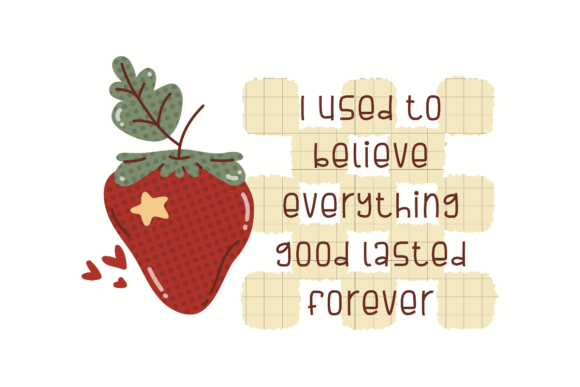
The phrase “I Used to Believe Everything Good Lasted Forever” carries a weight that goes beyond simple typography. It speaks to a generation that values authenticity and vulnerability. Visually, the design feels grounded in a retro aesthetic without being overly cluttered. The layout suggests a balanced composition that works well for various garment placements, from the center chest of a sweatshirt to the pocket area of a tote bag. The visual personality is warm yet slightly melancholic, which makes it incredibly versatile for personalized gifts and boutique branding.
What stands out immediately is the clarity of the message. In an era where fast fashion dominates, customers are increasingly drawn to items that tell a story. This embroidery project offers that narrative instantly. The design doesn’t rely on complex illustrations to make its point; instead, it lets the words do the heavy lifting. This simplicity is a strength, as it ensures that the message remains legible even after multiple wash cycles—a critical factor for any handmade product intended for long-term use.
Real-World Application: From Screen to Stitch
To truly understand the value of this graphics asset, we have to imagine it in action. Let’s consider a practical scenario: creating a custom embroidered tote bag for a local artisan market. The goal is to create a custom apparel accessory that feels both stylish and sentimental. When I visualize Everything Good Lasted Forever stitched onto a natural canvas tote, the contrast between the thread and the fabric becomes paramount. The design’s clean lines suggest it would hold up beautifully against the textured weave of canvas, offering a professional finish that elevates the perceived value of the item.
Similarly, imagine this design on a heavyweight cotton sweatshirt for a cozy autumn collection. The sentiment aligns perfectly with the season’s desire for comfort and nostalgia. For Etsy sellers, this opens up opportunities for seasonal marketing, particularly around holidays or back-to-school periods where emotional connection drives sales. The design also lends itself well to baby items, such as muslin blankets or nursery decor, where parents often seek meaningful messages for their children’s rooms. However, the tone must be carefully considered for very young children; it may resonate more with millennial or Gen Z parents who appreciate the reflective nature of the quote.
Technical Performance and Stitch Considerations
When converting a digital embroidery file into a physical reality, technical details matter. While specific stitch counts and hoop sizes are not provided in the source material, experienced designers know that text-heavy designs require careful attention to stitch density. If the text is too dense, the fabric may pucker; if it is too sparse, the stability of the letters may suffer. It is crucial to test the Everything Good Lasted Forever design on scrap fabric before committing to a final piece.
Thread color selection plays a significant role in the final outcome. On light fabrics, dark threads provide high contrast and readability, while on darker fabrics, lighter threads or metallic accents can create a striking effect. Designers should also consider the type of stitches used. A combination of satin stitch for outlines and fill stitch for background elements can add dimension and texture, making the design pop off the fabric. For smaller details, a fine running stitch might be appropriate, but only if the fabric allows for it without distortion.
Where to Use Carefully: Limitations and Challenges
No design is perfect for every surface. There are certain situations where Everything Good Lasted Forever might present challenges. Small hoop sizes can compress text, making it difficult to read, especially if the font size is reduced significantly. Textured fabrics, such as bouclé or thick fleece, can obscure fine details, so a smoother fabric is recommended for optimal clarity. Additionally, stretchy fabrics like jersey knit require proper stabilization to prevent distortion during stitching. Without adequate stabilizer support, the tension of the threads could cause the design to warp, ruining the aesthetic.
Dark fabrics also pose a challenge, particularly if the original design relies on subtle shading or light-colored threads. In such cases, underlay stitches become crucial to ensure opacity and vibrancy. Curved surfaces, such as caps or hats, require designs that can accommodate curvature without losing proportion. Designers should inspect small details closely when digitizing or preparing the file for these applications. Furthermore, products that undergo frequent washing, such as kitchen towels or aprons, need robust stitching to withstand wear and tear. Testing the durability of the thread and stitch quality is essential for these high-use items.
Impact on Brand and Customer Trust
A well-executed embroidery design enhances brand consistency and professionalism. When customers receive a finished product that looks polished and intentional, their trust in the maker increases. This design, with its thoughtful sentiment and clean execution, can help establish a boutique as one that cares about quality and meaning. It encourages buyer engagement by inviting conversation—customers often ask about the inspiration behind a phrase, providing an opportunity for the seller to connect on a deeper level. For commercial embroidery projects, this level of detail can justify higher price points, positioning the item as a premium gift or keepsake.
Practical Tips for Embroidery Designers
- Test on Scrap Fabric: Always run a test stitch-out to check for puckering, tension issues, and color accuracy before producing a full batch.
- Check Thread Contrast: Ensure that the chosen thread colors provide sufficient contrast against the fabric for maximum readability.
- Review Stitch Density: Adjust the density settings in your software to match the fabric type, preventing holes or stiffness.
- Confirm Hoop Size: Verify that the design fits comfortably within your standard hoop sizes to avoid unnecessary trimming or re-hooping.
- Inspect Small Details: Zoom in on the digital file to identify any tiny elements that might get lost in translation during stitching.
- Use Black and White Mockups: Convert the design to grayscale to evaluate the balance and composition without the distraction of color.
- Compare Backgrounds: Test the design on both light and dark fabric swatches to see how it performs in different lighting conditions.
- Select Proper Stabilizer: Choose a stabilizer (cut-away, tear-away, or water-soluble) that matches the fabric’s weight and stretch.
- Verify Licensing: Before selling finished items or distributing design assets, confirm the licensing terms to ensure compliance with commercial use policies.
Final Verdict
The Everything Good Lasted Forever graphic is a strong candidate for designers looking to expand their catalog with meaningful, high-quality embroidery projects. Its retro charm and emotional resonance make it suitable for a wide range of applications, from tote bag design to holiday embroidery. By paying attention to technical details like stitch density, fabric choice, and stabilization, makers can bring this design to life in a way that delights customers and strengthens their brand. Whether you are a hobbyist creating a personalized gift or a small shop product developer aiming for market success, this design offers a solid foundation for creativity and commerce.