Vintage Kitchen Baking Silhouettes Review
As a designer who spends half my life staring at stitch charts and the other half worrying about whether a client’s logo will survive a wash cycle, I don’t just buy embroidery files—I stress-test them. When Vintage Kitchen Baking Silhouettes landed in my inbox, my first thought wasn’t about nostalgia; it was about execution. Could this actually work for a commercial project, or is it just another pretty image that falls apart when converted to stitches? After running some mental simulations and looking closely at the vector structure, here is my honest take on how this design holds up in the real world of handmade commerce.
The First Impression: Mood Meets Mechanics
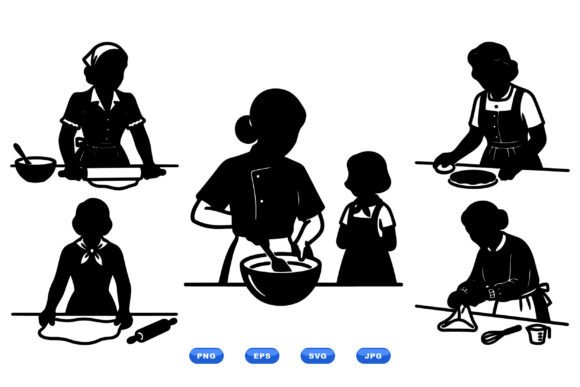
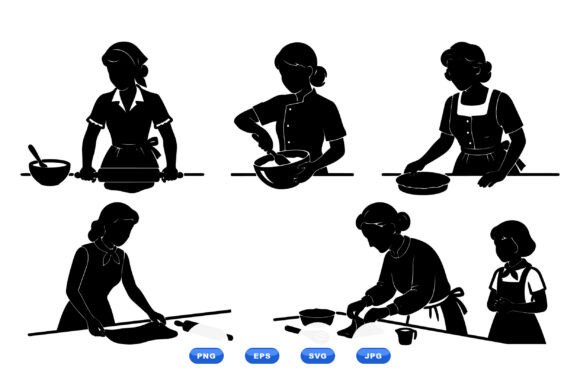
From a visual standpoint, Vintage Kitchen Baking Silhouettes hits a sweet spot that many crafters miss. It isn’t overly complex, nor is it so simple that it looks unfinished. The composition features retro silhouette women performing baking tasks—rolling, mixing, and folding dough—with a child observing in the background. This creates an immediate narrative. In the world of custom apparel and personalized gifts, storytelling sells. A buyer doesn’t just want a picture of a kitchen; they want the feeling of a Sunday morning with family.
The silhouette style is a designer’s best friend because it reduces clutter. Solid shapes translate better to thread than intricate line art, which often gets lost or looks muddy after stitching. The layout feels balanced, suggesting that this design can be centered on a tote bag design or placed off-center on a sweatshirt embroidery without feeling awkward. It has a warm, nostalgic mood that fits perfectly into the current trend of cottagecore and vintage-inspired home decor.
Real-World Application: Where Does It Shine?
I see this embroidery project finding its natural home in a few specific categories. First, let’s talk about handmade product lines for Etsy sellers. This design is ideal for aprons. Imagine a heavy cotton canvas apron with this motif stitched near the pocket. The contrast between the rugged fabric texture and the smooth silhouette would look incredibly professional. It elevates a basic utility item into a boutique piece.
Secondly, this works beautifully for nursery and baby items. The inclusion of the child observing adds a layer of tenderness that resonates with parents. A baby embroidery application could involve placing this on a muslin blanket or a soft cotton onesie. However, caution is needed here regarding scale. If you are scaling this down too much, you risk losing the emotional connection of the figures.
For holiday embroidery, particularly around Thanksgiving or Christmas, this design serves as a great "everyday" gift. It’s not seasonal in a restrictive way, but it evokes the spirit of gathering and cooking. Think of it as a perfect addition to a set of kitchen towels or a decorative pillow cover sold as a matched pair. It also translates well to commercial embroidery for local bakeries or cafes looking for branded merch that feels artisanal rather than corporate.
Technical Considerations and Potential Pitfalls
While the concept is strong, no file is perfect out of the box. As an experienced reviewer, I have to point out where you need to be careful. The primary concern with any silhouette-based machine embroidery design is the fill density. Because these are solid shapes, the machine will likely use a dense fill stitch to cover the area. On thin fabrics or stretchy knits, this can cause puckering. If you are planning to put this on a lightweight t-shirt or a delicate tea towel, you must use a high-quality stabilizer and perhaps test a lighter stitch pattern if your software allows.
Another critical factor is the hoop size. You need to confirm the exact dimensions before you start digitizing or importing. If the design is too large for a standard 4x4 hoop, you will either need to resize it (which might distort the aspect ratio) or use a larger frame. Always check the hoop size compatibility with your specific machine capabilities.
Thread color selection is equally important. Since the design relies on silhouettes, the contrast between the thread and the fabric is everything. On dark fabric, you’ll need bright or metallic threads to make the shapes pop, but be aware that dark fabrics can sometimes show the texture of the stitch density more aggressively. Conversely, on light fabric, a darker thread provides a classic, sharp look. I recommend testing a small swatch to ensure the thread colors provide enough distinction against your chosen material.
What to Avoid
- Small Hoop Sizes: Do not attempt to stitch this in a tiny hoop unless you are willing to crop significant portions of the scene. The narrative relies on the interaction between the adults and the child.
- Textured Fabrics: While denim or burlap can look cool, highly textured surfaces can hide the clean lines of a silhouette. Test carefully to ensure the details remain visible.
- Curved Surfaces: Applying this to a cap or hat requires advanced hooping techniques. The flat nature of the design might not follow the curve of a baseball cap naturally without distortion.
- Dense Stitch Areas: If the original digitization uses very tight satin stitches for outlines, it may become stiff. Look for designs that balance fill and run stitches for better drape.
Design Assets and Commercial Viability
For those of us selling design assets or finished goods, the versatility of Vintage Kitchen Baking Silhouettes is its greatest asset. The fact that it comes as a vector means you have control over the final output. You can adjust the scale, change the orientation, or even break it apart to create smaller accents for embroidered patches. This flexibility is crucial for Etsy sellers who need to differentiate their products from mass-market competitors.
When creating printable mockups for your shop, this design lends itself to lifestyle photography. Pair it with props like flour sacks, wooden rolling pins, and dried herbs to enhance the vintage aesthetic. This attention to presentation builds customer trust and suggests that the finished product will be of high quality. It signals professionalism and care, which are key drivers for craft business success.
Final Verdict
Does Vintage Kitchen Baking Silhouettes earn a spot in your library? Yes, but with preparation. It is not a "plug-and-forget" file if you want premium results. You must invest time in testing. Check the stitch density, inspect small details for potential thread breaks, and always test on scrap fabric before committing to your final finished product.
This design is perfect for makers who understand that embroidery is as much about problem-solving as it is about creativity. If you are prepared to manage the technical aspects—like stabilizer choice and thread contrast—you will find that this graphics package offers excellent value. It bridges the gap between artistic appeal and practical application, making it a reliable tool for creating meaningful personalized gifts and memorable small shop products. Just remember to review the licensing terms carefully if you plan to sell the physical items, ensuring you respect the creator’s rights while building your own brand identity.