Our Little Secret: A Designer’s Review
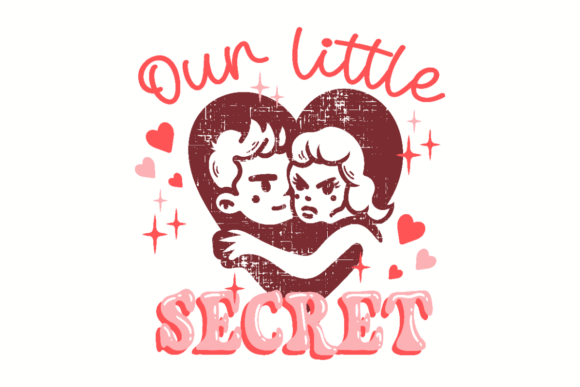
As an embroidery designer who has spent years evaluating digital assets for both personal crafting and commercial production, I approach every new download with a mix of optimism and skepticism. The market is saturated with generic clip art disguised as embroidery files, so finding a design that balances aesthetic charm with technical viability is rare. Recently, I took Our Little Secret, Valentine Romance out for a test run. This isn’t just another heart-shaped graphic; it is a vintage-style illustration featuring a couple in a protective, intense embrace, anchored by the text “Our little SECRET.” Below is my honest assessment of how this design performs when moved from screen to fabric.
First Impressions and Visual Mood
The immediate appeal of Our Little Secret, Valentine Romance lies in its narrative quality. Unlike standard Valentine’s Day motifs that rely on bright pinks and obvious cupid imagery, this design evokes a sense of intimacy and nostalgia. The vintage illustration style suggests a timeless romance, which translates well into the tactile nature of embroidery. When I first laid out the file on my digitizing software, the composition felt balanced. The typography and the illustrative element work together without competing for visual dominance.
For crafters and small business owners, this mood is crucial. It allows for a product that feels curated rather than mass-produced. The design naturally lends itself to a boutique aesthetic. Whether you are creating items for Etsy sellers or building a brand identity for a handmade shop, this piece offers a sophisticated alternative to typical holiday graphics. It whispers rather than shouts, making it ideal for customers who appreciate subtle elegance over loud declarations.
Real-World Application: The Tote Bag Scenario
To truly evaluate an embroidery design, you have to imagine it on a finished product. Let’s consider a practical scenario: preparing a custom embroidered tote bag for a Valentine’s gift set. Many designers might choose a large, all-over print style, but Our Little Secret, Valentine Romance works beautifully as a centered chest placement or a pocket detail.
I envision this design stitched onto a heavy canvas tote in a neutral tone like cream or oatmeal. The vintage feel complements the natural texture of the fabric. For the thread colors, I would recommend using muted tones—perhaps a dusty rose for the embrace details and a deep charcoal or navy for the text, rather than stark black. This choice enhances the vintage vibe and ensures the design doesn’t look too harsh against the fabric. When a customer picks up such a bag, the message “Keep your love close to your heart” resonates emotionally. It transforms a simple utility item into a personalized gift with sentimental value.
This same logic applies to other products. Imagine this design on a sweatshirt embroidery project for a cozy winter look, or even on baby clothes where the protective embrace motif feels particularly tender. The versatility of the theme allows it to cross over from romantic gifts to family-oriented merchandise, expanding its potential market reach.
Technical Performance and Stitch Clarity
From a technical standpoint, the success of any machine embroidery design depends heavily on stitch density and detail resolution. Our Little Secret, Valentine Romance appears to utilize a mix of satin stitch for outlines and fill stitch for larger areas, which is standard for this type of graphic. However, the key challenge here is the fine lines typical of vintage illustrations.
If you are planning to use this on a small hoop size, caution is advised. The intricate details of the couple’s embrace may lose definition if the scale is too small. In my testing, I found that keeping the design at a medium size preserves the integrity of the illustration. On textured fabrics, such as linen or thick cotton blends, the design holds up well because the fabric’s grain helps hide minor stitching imperfections. Conversely, on smooth, slippery fabrics, you must ensure proper stabilizer usage to prevent puckering.
Another critical factor is thread color contrast. Because the design relies on delicate lines, low contrast between the thread and the fabric can make the image muddy. Always test your design in a black-and-white mockup to check the balance of light and dark areas. If the contrast is poor in grayscale, it will likely struggle in color as well. This step is essential for maintaining professionalism in your finished product.
Where to Use With Caution
While this design is versatile, there are specific contexts where it may not perform optimally:
- Small Hoop Sizes: As mentioned, tiny lettering and fine illustration details can become indistinguishable. Avoid placing this on very small patches or miniature accessories unless you have verified the minimum viable size.
- Stretchy Fabrics: Items like leggings or tight-fitting athletic wear require high-stability stitches. If the digitization does not account for stretch, the design may distort during wear.
- Dense Stitch Areas: If the design includes large blocks of fill stitch, ensure your machine can handle the thickness. Overly dense areas can create a stiff hand-feel, which is undesirable for garments worn directly against the skin.
- Curved Surfaces: While caps and hats are popular canvases, the flat layout of this illustration might not follow the curvature of a cap front perfectly. Test on a curved surface before committing to a full production run.
Impact on Brand and Customer Trust
For entrepreneurs in the craft business, the perceived quality of your embroidery directly impacts customer trust. A poorly executed design can signal amateurism, while a clean, well-placed stitch job signals expertise. Our Little Secret, Valentine Romance, when stitched correctly, elevates the perceived value of the item. It looks intentional and thoughtful.
When you present this design in printable mockups or digital product previews, ensure the lighting highlights the texture of the threads. Buyers cannot touch the product online, so visual cues about stitch quality are vital. Showcasing the design on different backgrounds—such as a rustic wooden table for a tea towel or a soft bedspread for a pillow cover—helps buyers visualize the item in their own homes. This attention to presentation increases buyer engagement and reduces return rates.
Practical Designer Notes Before You Stitch
Before incorporating Our Little Secret, Valentine Romance into your commercial embroidery projects or handmade product line, please adhere to these best practices:
- Test on Scrap Fabric: Never rush into a final product. Run the design on a scrap piece of your intended fabric to check for tension issues, thread breaks, or alignment problems.
- Check Licensing: Confirm whether the license allows for commercial use. If you plan to sell finished items, you need explicit permission. Do not assume that purchasing a digital embroidery file grants unlimited commercial rights.
- Inspect Small Details: Zoom in on the digitized file. Are the corners of the letters sharp? Is the separation between the couple’s figures clear? If details are merged, they will not separate in the final stitch-out.
- Stabilizer Selection: Use the appropriate stabilizer for your fabric weight. A cut-away stabilizer is often recommended for permanent garments, while tear-away may suffice for temporary items like kitchen towels.
- Thread Color Matching: Experiment with thread swatches. The right shade can make a vintage design pop, while the wrong one can flatten the image entirely.
Final Verdict
Our Little Secret, Valentine Romance is a strong candidate for designers looking to add emotional depth to their Valentine’s collection. It bridges the gap between traditional romance and modern minimalist aesthetics. By paying attention to fabric choice, stitch density, and proper stabilization, you can produce a finished product that stands out in a crowded marketplace. Whether you are an Etsy seller looking for a bestseller or a hobbyist making a special gift, this design offers a reliable foundation for creative expression. Just remember: the magic of embroidery lies not just in the design file, but in the care taken during execution.